- Trishan's Newsletter
- Posts
- The One Exercise That Separates You From 99% of People
The One Exercise That Separates You From 99% of People

Trishan Lekhi
August 13, 2025
You’re drifting. Not because you’re lazy. Not because you lack ambition. But because the default human state is drift — a slow, quiet slide into entropy.
And entropy doesn’t announce itself. It doesn’t kick down the door and scream, “I’m here to ruin you!” It’s polite. Subtle. Almost tender in its approach. It seeps in through small compromises, delayed decisions, harmless indulgences.
One day you wake up and realize you’ve been living in a room where the air’s been getting thinner for years.
This manifesto is your oxygen mask.
I. The Lie of Vision
The self-help world has been lying to you. Every book, guru, and TED Talk hammers the same cliché: “You need a clear vision for your life.”
But here’s the truth — the human brain is more responsive to threat than promise. This isn’t motivational fluff, it’s neurobiology. Your amygdala, the fear center of your brain, is a primitive alarm system. It reacts faster and more forcefully to danger than your prefrontal cortex reacts to reward.

That’s why athletes who fear losing often outperform those who merely want to win. It’s why soldiers under fire don’t think about medals — they think about not dying.
If you only build your life around what you want, you’re fighting a war with dull weapons. You need the other half: your anti-vision — a crystal-clear image of the hell you refuse to live in.
II. How to Forge Your Anti-Vision
Your anti-vision isn’t “I don’t want to be broke” or “I don’t want to be unhealthy.” Those are vague, flimsy lines in the sand.
An effective anti-vision has texture, detail, emotional weight. It’s visceral. You should feel it in your gut.
Example:
Not: “I don’t want to be stuck in a dead-end job.”
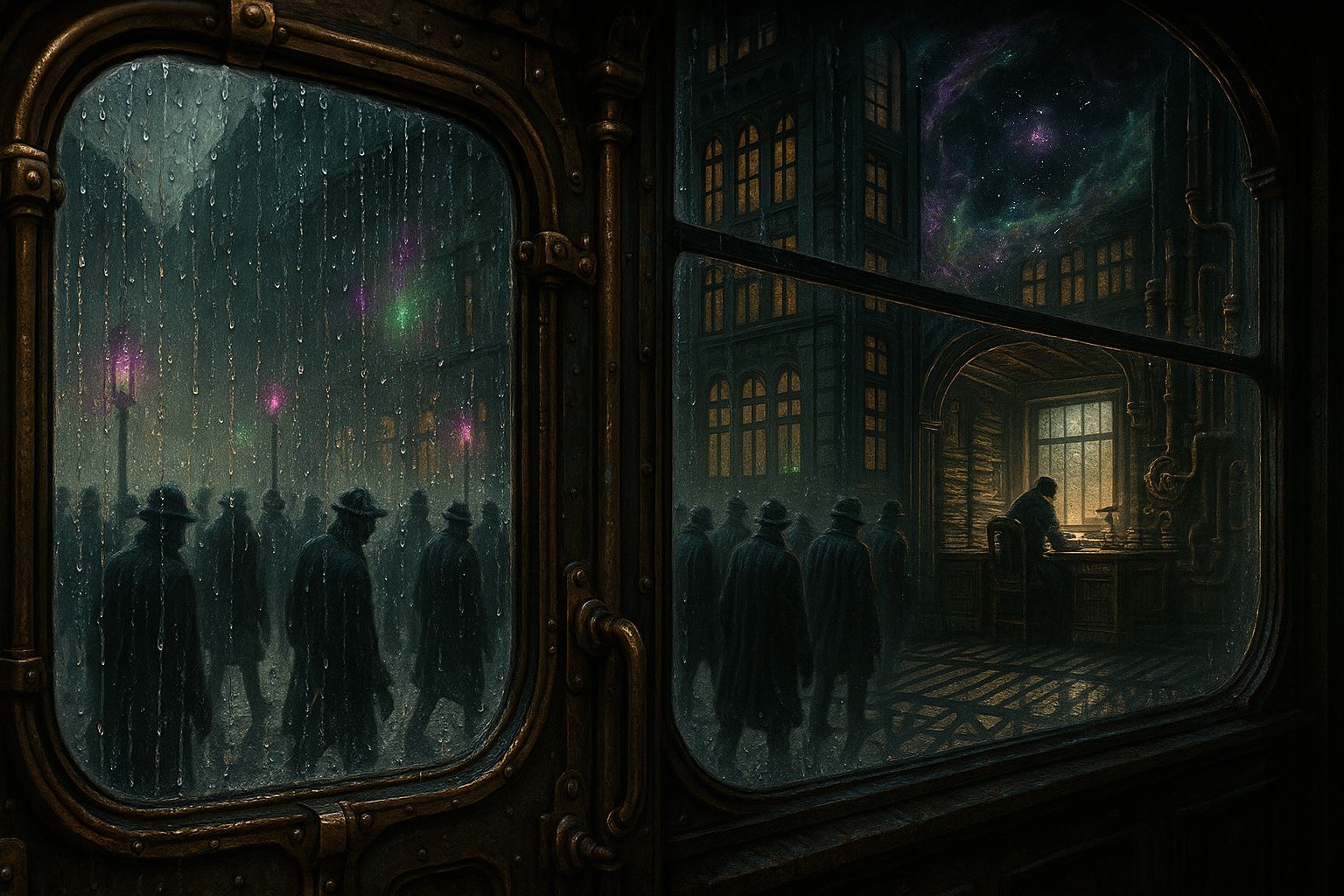
Yes: “I refuse to wake up at 6:30 AM, commute an hour in grey winter rain, and sit under flickering fluorescent lights while my spine slowly curves into a permanent question mark.”
When you write it, don’t edit for politeness. Don’t soften the edges. Your anti-vision is your private war map. It’s not for public inspiration.
III. Weaponizing Negative Energy
We’re told to banish anger, fear, disgust. But in the right container, they’re high-octane fuel.
A samurai doesn’t throw away his sword because it’s sharp. He learns control. You don’t suppress these states — you weaponize them.
Fear keeps you from touching the stove twice. Anger makes you tear apart the thing that’s trapping you. Disgust prevents you from swallowing poison — whether that’s in food, ideas, or relationships.

Your anti-vision should trigger these emotions. That’s the point. If you read it and feel nothing, it’s useless.
IV. Systems as Armor
Once your anti-vision is forged, you need armor — systems that make it harder to slip into that hell-state than to maintain your trajectory.
Why? Because willpower is a weak, temporary currency. Systems compound.
A sushi chef doesn’t think, “I will focus today.” He sharpens his knife the same way every morning. Same whetstone. Same rhythm. Same hand pressure. The ritual is the focus.
A professional tennis player doesn’t re-learn his grip before every match. His hands default to the exact muscle memory he’s drilled thousands of times.
Systems aren’t glamorous. They’re repetition, constraint, and ritual. But they’re also freedom. They’re the moat around your castle.

V. The Myth of Glamour in Mastery
The dopamine economy has sold you the lie that mastery is exciting. That every day at the top is a highlight reel.
Here’s the truth: Mastery is boredom weaponized. It’s the treadmill, not the sprint. It’s hitting the same forehand 10,000 times until the grip is part of your nervous system.
When you accept that the boredom is the point, you’ve crossed the threshold most people never will. That’s why they plateau. That’s why they slide back into their anti-vision without even realizing it.

VI. Field Deployment: The Three-Phase Blueprint
This isn’t theory. Here’s how you deploy it in the field.
Phase 1: Construct the Hell You Refuse
Write out your anti-vision in obscene, unfiltered detail.
Make it physical: a page in your wallet, a note taped inside your bathroom mirror.
Read it every morning until it burns into your nervous system.
Phase 2: Build Micro-Systems of Immunity
Identify the 3–5 habits that will keep you farthest from your anti-vision.
Automate them. Anchor them to existing routines.
Example: If your anti-vision includes feeling sluggish and weak, your system is lifting heavy 3x/week, at the same time, same place, no debate.
Phase 3: Weaponize Emotional Fuel
When you feel yourself drifting, revisit the anti-vision.
Let the disgust, fear, and anger rise — but then channel it into the next action.
Never let the emotion sit idle. Motion is the antidote.
VII. The War Never Ends
Here’s the part no one wants to hear: This isn’t a one-time exercise. Entropy is patient. It waits for you to relax, then creeps back in.
Your anti-vision is not a single map — it’s a living, evolving enemy dossier. Update it as you grow. Strengthen your systems. Sharpen your weapons.
The war doesn’t end because you win a few battles. It ends when you’re dead. Until then, your choice is simple: drift into the hell you tolerate, or march toward the life you defend with your whole being.
VIII. The Manifesto Oath

If you’re still reading, you already know. You’ve felt the drift. You’ve seen flashes of your own anti-vision in the mirror, in your calendar, in your bank account.
So here’s the oath:
I will not drift. I will not allow entropy to write my story. I will name the hell I refuse, and I will build the armor to keep it out. My life will not be a series of small compromises. It will be a war worth fighting.
If you can take that oath and mean it, you’ve already separated yourself from 99% of the population. Not because you have a vision. But because you have declared war on your own mediocrity.
This isn’t just a framework.
It’s a weapon.
Now — use it.
Your well-wisher,
- Trishan Lekhi.