- Trishan's Newsletter
- Posts
- Stop Being So Nice — It’s Killing You Inside
Stop Being So Nice — It’s Killing You Inside

Trishan Lekhi
August 07, 2025

Let me tell you a story. It begins with a packet of yellow chips, a fourth-grade lunch break, and a senior student with the moral compass of a pickpocket.
There I was, sitting quietly on the school stage with my lunchbox, introverted as ever, hoping not to be noticed. And then—WHAM—a giant hand snatched my tiffin from behind. “Give me the chips, or I’ll keep your lunch,” the older boy snarled.
I handed over my chips. What else could a small, shy kid do? But something inside me twisted—a silent, smoldering rage. Not because I lost my chips, but because I had no power. And over time, little moments like this stacked up like hidden files in the hard drive of my mind.

On the surface, I stayed the same: calm, polite, even friendly. But inside? Fury. Confusion. Rebellion.
That’s the strange paradox. Some of the calmest people you know are boiling inside. The nicest ones—the ones who smile, compromise, play fair—often carry the most hidden rage.
Let’s talk about why.
The Sweet Child Who Became a Stranger to Himself
In childhood, most of us are curious, impulsive, and full of wild, uncensored energy. We want to yell, touch everything, ask absurd questions, and sometimes act out in weird ways. That’s normal. That’s nature.
But then comes the training.
“Don’t shout.” “Don’t touch.” “Don’t ask stupid questions.” “Don’t be angry.”
So we shrink. We adapt. We put masks on our real impulses to become the version of ourselves that’s acceptable to adults—parents, teachers, relatives.
In psychological terms, this is where the ego and persona step in.
The Self is who we truly are.
The Ego is who we think we are.
The Persona is who we show to the world.
But there’s another character in this play. One that lives in the shadows.
What You Repress Doesn’t Die—it Waits
Whenever your ego says, “This part of me is unacceptable,” it shoves that trait into your unconscious. That’s your shadow.
The anger you weren’t allowed to express. The lust you were shamed for. The selfishness you were scolded for. The pride you were told to hide.
None of it vanishes. It just goes underground.

And what happens to repressed emotions? They become behavioral glitches. They find detours. That’s why:
The perfectionist becomes enraged when others relax.
The male feminist secretly resents women.
The most obedient kid grows into a rebellious adult.
The humble spiritualist hurls insults in comment sections.
Unexpressed emotion doesn’t disappear. It mutates.
Rage in a Gentleman’s Suit
When you live your life being “nice,” you accumulate hidden resentment—especially when others take advantage of your silence.
In my case, I’d walk out of tuition and find groups of guys on Bullets waiting to confront me. Why? Because I had the audacity to talk to someone’s girlfriend. I wasn’t a flirt. I was just decent and confident—and that was threat enough.
But somehow, even those guys would say, “He looks so innocent, I don’t even feel like hitting him.”
You see the dilemma? I was nice enough to avoid being punched, but too passive to stop being targeted.
And that turns your identity into a cage. On the outside, you’re the peacemaker. On the inside, you’re screaming.
Shadow Projection: The Inner War We Wage on Others
Here’s the kicker: When we can’t accept our shadow, we project it.
You see someone rich and happy, and your blood boils. Why? Because deep down, you’ve been told money is dirty or happiness must be earned through suffering.
You see someone taking it easy while you grind for approval—and suddenly, they become your enemy. Not because they hurt you. But because they remind you of a version of yourself you weren’t allowed to become.
This is shadow projection. It’s the unconscious act of hating in others what you’ve disowned in yourself.
And it’s everywhere:
The rigidly moral leader caught in scandal.
The motivational speaker who burns out.
The therapist who hasn’t healed their own trauma.
The more aggressively someone denies a trait, the more likely they’re ruled by it in secret.
The Neuroscience of Suppression
Now let’s take a brief detour into your brain.
When you consistently suppress an emotion—like anger or desire—the neural pathways that sense that emotion weaken. It’s not that you’ve “cured” the emotion. It’s that you’ve lost the ability to even recognize it.
Think of it like breaking the antenna on your radio. The signal is still there. But you can’t receive it anymore.
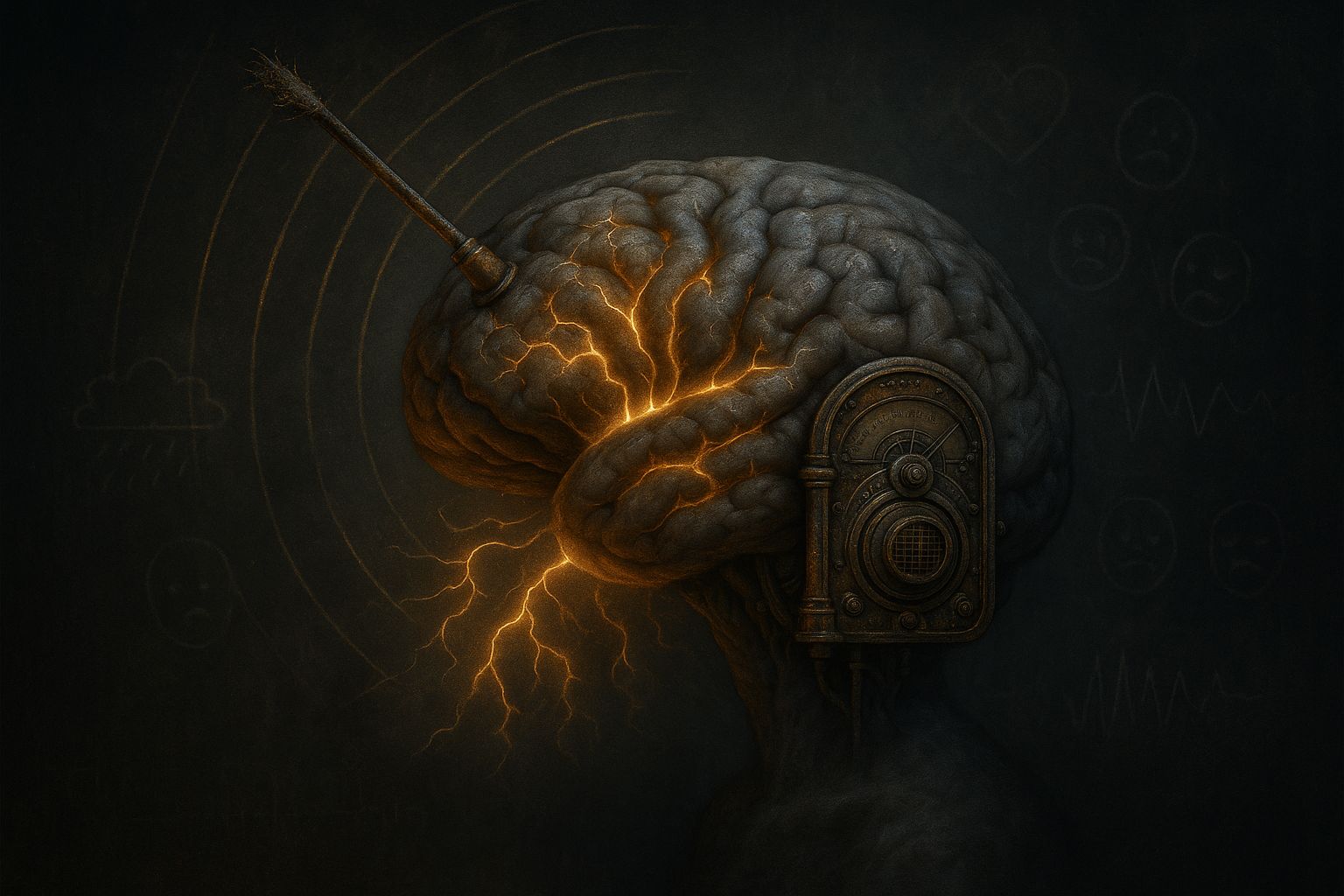
This is why you might:
Explode over small things without knowing why.
Feel constant low-grade frustration but can’t name the source.
Judge people for behavior you secretly envy.
The root problem? You’ve lost touch with your own emotional signals.
Shadow Work: Meeting the Parts You’ve Hidden
Here’s the good news. Just because something was buried doesn’t mean it’s lost forever.
Shadow work is the process of uncovering the disowned parts of yourself. And one of the simplest entry points? Look at who you judge.

Who triggers you?
Who do you envy, mock, or resent?
Who seems to “get away” with things you’ve always been punished for?
Now ask: What part of me sees something familiar in them?
The more we embrace our shadow, the more whole we become. And the irony is, the moment we do, our judgments soften. Our arrogance fades. Our compassion grows.
A Story from the Gita: Integrating the Warrior
Even Arjun, the noble warrior of the Mahabharata, faced this inner conflict. He stood on the battlefield, paralyzed—not by fear of death, but by the thought of betraying his moral self.
“I can’t fight my family,” he said.
Krishna didn’t scold him. He helped him integrate his shadow.
He reminded Arjun that true virtue includes the capacity for destruction—when done in the service of dharma. When Arjun finally understood this, he picked up his bow not in hatred, but in clarity.
That’s the point: the goal isn’t to become good. It’s to become whole.
Practical Takeaways: How to Begin Shadow Work
Track Your Triggers – What behaviors or people annoy you disproportionately? Write them down.
Ask Why – What part of them reflects something you’ve disowned?
Explore the Origin – Who told you that part of you was bad? Parents? Teachers? Culture?
Practice Safe Expression – Journal it. Talk to a friend. Or use roleplay, like the wise mother who helped her child process anger through play.
Study What You Envy – Instead of hating the relaxed rich guy, ask: What is he doing differently? What can I learn?

The Final Word: You Weren’t Born Broken
The parts you buried were never bad. They were just misunderstood.
You’re not weak because you feel angry. You’re not fake because you wear different masks in different situations. You’re not evil because you’re human.
You’re just layered. Like all of us.
And the journey back to your power starts with owning every part of yourself—not just the good, but also the gritty, the dark, the fierce.
That’s how we reclaim our wholeness. Not by becoming perfect—but by becoming real.
Your shadow is not your enemy. It’s your doorway.
The only way out is in.
— Trishan Lekhi